Solar energy
Solar compatibility is about more than watts
A connector fitting can feel like the job is done. For a panel and station, it is only one check: voltage, current and operating conditions still matter.
Updated:
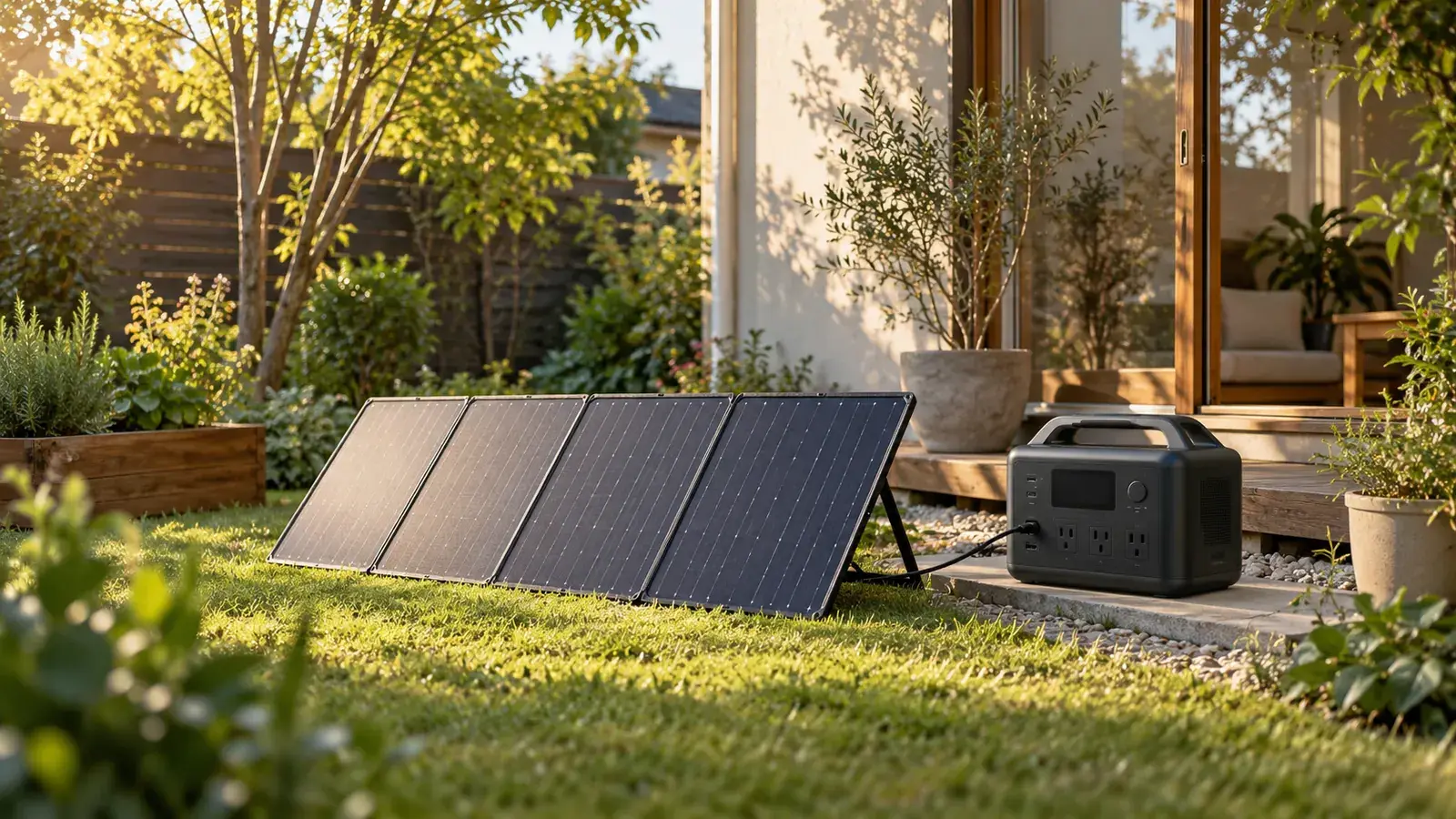
Fictional household scenario · not a customer account
When this becomes a household question
Imagine a station owner finding a panel with an appealing watt rating and a suitable-looking adapter. The watts look right, but nobody has compared voltage requirements. That match is not a basis for connecting the equipment.
Start with the station input
Find the documented MPPT range and maximum voltage, current and power. Compare panel data with the relevant conditions accounted for. Open-circuit voltage, Voc, changes with temperature. A missing figure cannot be guessed simply because the other values are convenient.
An adapter does not verify electrical compatibility
An XT60, XT90 or other desired connector does not establish polarity or acceptable electrical values. Series and parallel wiring change different quantities, so assess the complete array. Do not copy another setup without documentation for your own equipment.
Use the full panel name
SP400 Pro and SP420 are different panels. Compare data for your exact model, including the temperature information needed for the setup. When documentation is missing, “not yet established” is the useful answer. It is better than a confident connection based on a similar picture or name.
Verification and selection references
Original specification evidence is retained in the editorial research archive. Links below lead to Ukrainian shop pages. Calculations do not guarantee compatibility, runtime or stock.


