HOME POWER / FIELD GUIDE
Choosing a station
Compare capacity, output, recharge and purchase terms using a consistent method.
 AI illustration
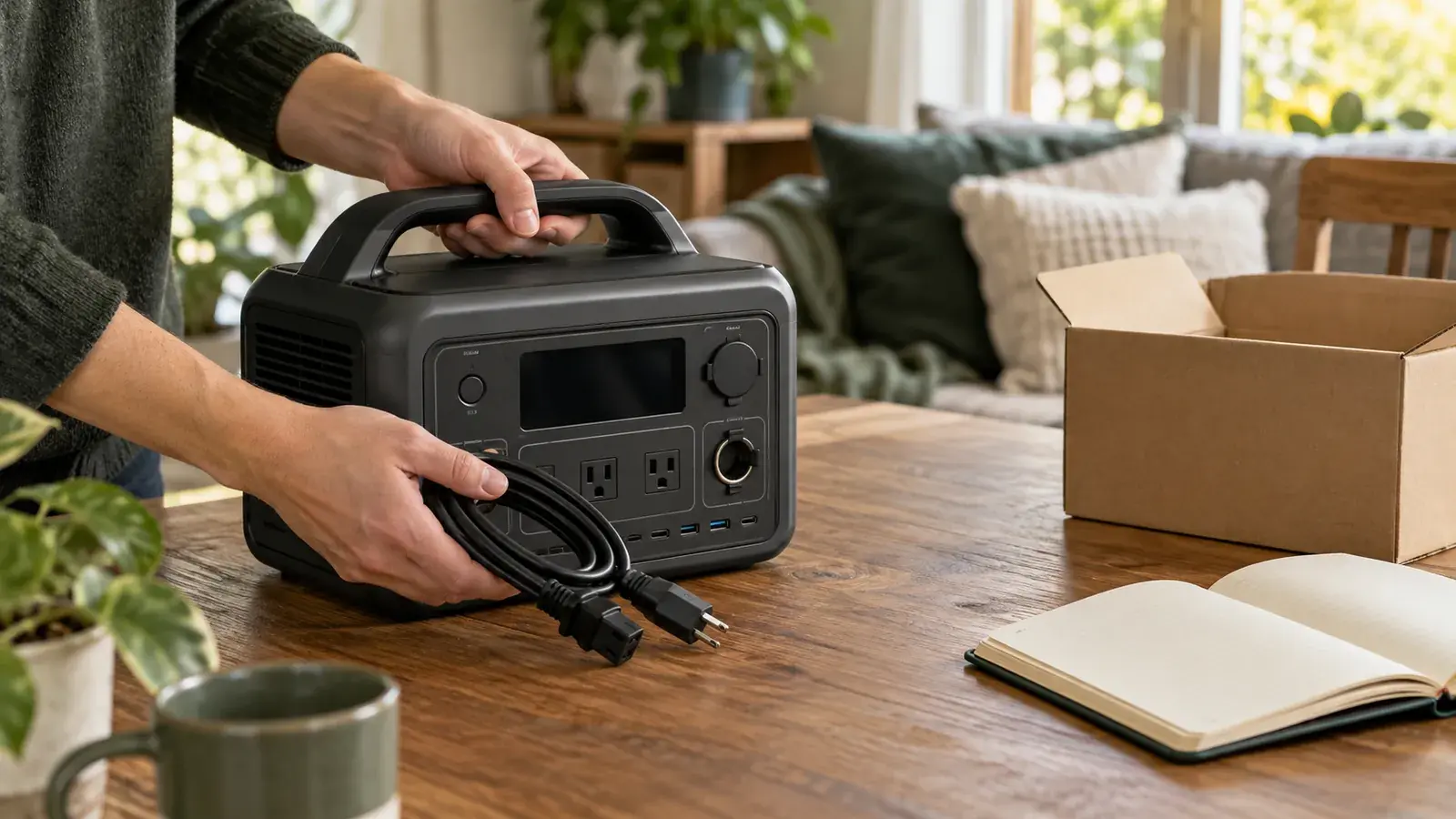
Buying a family power station: bundle, warranty and seller checks
After choosing a model come less glamorous questions: what will arrive, which leads are included and whom to contact if something goes wrong. Ask them before paying.
Read storyAI illustrationA short mains window: will the station recharge before evening?
A short mains window changes the question. Knowing how long the station can run is no longer enough. Will it replace the energy used before the next outage?
Read storyAI illustrationUPS or EPS in a home station: what to verify first
A UPS label alone cannot rule out a computer restarting during transfer. You need the equipment requirements and the exact conditions of the station’s mode.
Read storyAI illustrationF2400 or F3000 at home: more watts do not mean a longer evening
It is tempting to choose the larger number in this comparison. For extra hours, look at capacity first. For a demanding appliance, look at output and operating mode.
Read storyAI illustration1 kWh or 2 kWh: which station capacity does a family need?
In a shop, 1 kWh versus 2 kWh looks like simple arithmetic. At home it becomes a practical question: are you paying for useful hours, or extra capacity that is harder to carry and recharge?
Read storyAI illustrationHow to audit household loads before buying backup power
Sometimes the most useful thing to buy before a power station is nothing at all: start with a sheet of paper. It reveals what runs for hours, what runs for a minute and which figures are guesses.
Read story